My brother told me once that he felt like Dad was waiting for him to show up in the States before he could pass on. He did pass on shortly afterwards in May of 1995. I suppose we can’t know for sure this is what happened, but it sure feels like it did.
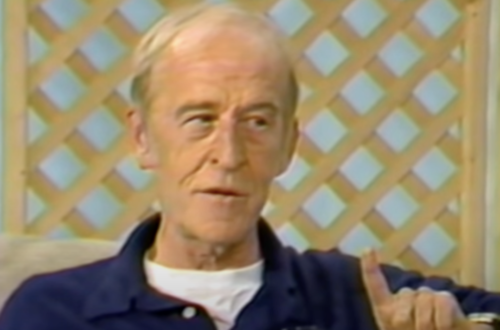
At that point in time, I had spent over a year helping my father’s companion, Ola, manage my father’s care and affairs in Louisville from New York. This included authorizing post-stroke life-saving measures that were not easy to make. But my brother was against all this. When he saw Dad, he felt that this situation was unthinkable and horrible—to keep him alive with zero odds of coming out of his catatonic prison. At the time, I thought this was just Doug’s cold, stark realism or perhaps the influence of European opinions on the right to die. But now, as I complete my 65th year, I understand perfectly. I would never want my family to have to make such terrible decisions on my behalf to continue living in such a state.
As far as my brother’s passing in 2016, it was likewise not sudden. The last few years for him were very bad and his health was declining rapidly, as he suffered from lung disease and edema. He knew he was not going to be around much longer, but I naively attributed this to his chronic negativity. Even as we spoke to make plans to see each other at the end of 2016, the decision to ultimately wait until he got things more together on his end proved a fateful decision. There was no next year. Me seeing him in that state probably would’ve been better than his experience seeing our father, but it would likely be just as sad how life can take a turn before anyone can prepare for it.
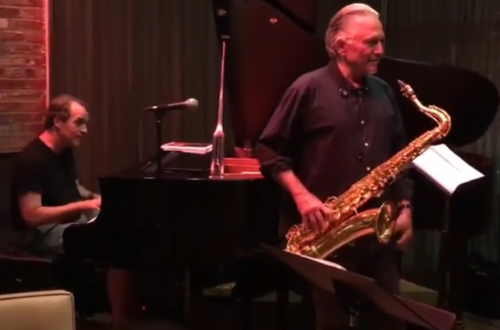
The memorial we prepared for him in 2016 in Denmark at Jazzhus Montmartre was both the saddest and most affirming experience I have ever had. In a long speech, I talked about how he was my protector when I was growing up—how he would beat the crap out of anyone who bullied me. And later on in life, I joked about how he would protect our duets from falling off the tempo. Prior to one duo gig, Doug told me, “The problem I have with walking bass is the tempo drops.” So on one gig I thought to myself, Nah, I’m grooving along, man, tapping on two and four, bing, bong, bong, bong, bong I go with my walking bass, completely oblivious to the fact that I was incrementally slowing down until even I began to realize I was in quicksand. “Fucking guy…” I quipped. That got a pretty big laugh.
I felt the love in the room and cried uncontrollably as my brother’s casket was wheeled away from the club on its way to his final resting place. This helped ease my ache somewhat of not being there for his final days, but in reality, losing a brother at such an early age just feels completely unnatural.
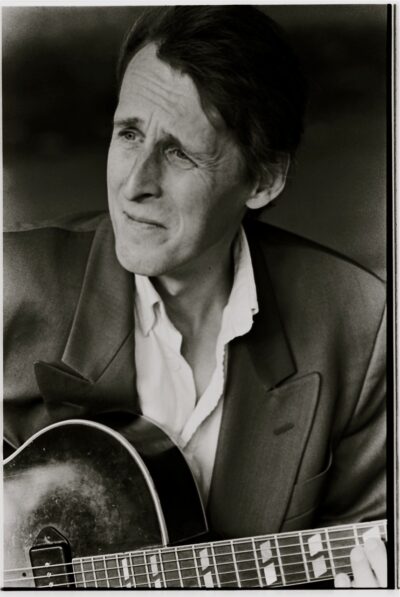
As I deferred to my older brother given his experience on the scene way before me, he too deferred to Dad. On gigs, he always played a quiet, propulsive, slick accompaniment and let my father shine. And, if I’m being honest, that was not always the case in reverse, as sometimes Dad would keep his guitar a little too loud during Doug’s solos and often mark the beats a bit too much. Yet, my father repeated often how Doug uniquely understood how to subtly propel him along, like the way Al Haig used to in the early days of the Stan Getz Quintet. A great example of this is how Doug plays for Dad on Dad’s classic return album, Raney ’81.
Jimmy’s solo on “What Is This Thing Called Love” is an absolute stunner, but you might take for granted how much Doug is helping make that happen. Listen carefully to Doug’s accompaniment here on the end of the bridge to the last A—how he comes in exactly in the spaces when Jimmy takes a pause, and then just pops in spots where Jimmy is active. Positively telepathic!
Another example of his supportive role he took is in this a recent video uncovered by Pieter Wichers of the Raneys playing live in 1981 with the same personnel as Raney ’81 (Jesper Lundgaard on bass, Eric Ineke on drums). On Cole Porter’s “I Love You,” you can see my brother grinning often during Dad’s solo (which comes after his own), as Dad is really just getting to that place he gets to when he’s in the zone—where everything is logical and anything is possible. At the end of Dad’s solo, Doug gives a little jaunty head movement, grins, turns his guitar over, and comments during the bass solo. Probably something to the effect of, “Leaving me in the dust again, Dad?”
Doug always played Dad’s changes, even if he occasionally didn’t particularly like them, like for example, on the second section of “How Deep is the Ocean,” Doug held the line despite his own preferences. He told me once that he even showed Dad the modern Miles Davis/Bill Evans changes for “On Green Dolphin Street”—the ones with the elegant, descending major 6-9 chords on the A section. Doug mentioned that Dad listened, found them “interesting,” and then promptly went right back to his usual F7/Eb to E7 to Eb turnaround.
Going back to Al Haig, Jimmy, and Doug for a minute: Al and Dad’s reunion tour in 1974 involved a concert in Weill Hall and two record dates, one of which resulted in Strings Attached in 1975. Technically, this was Doug’s debut record where he makes an appearance on “Out of Nowhere.” Doug, who was 18 at the time, attended the session and was itching to play and be recorded. Dad, who had obviously been on hundreds of recordings by this point, didn’t think Doug was quite ready yet (he knew he would be soon though). He warned him, “You know, if you record, it’s forever. You can’t take it back.” Doug, who always pushed hard to get places fast, did it anyway. Although Jimmy thought he did okay, Doug wasn’t thrilled with it afterward, just as Dad had predicted. I can’t help but think of my “bong-bong” bass line and Doug’s warning to me as a perfect analogue to this story.
Another thing about that date was how Dad felt about it generally. He really disliked it. As mentioned, Al used to be Dad’s favorite accompanist. But by this time, Al had seemingly changed his style from a hip bebopper to a rhapsodic, more over-the-top style, tinkering with modern era tunes for the date that Jimmy had to read on the spot, that neither player was suited to—namely Herbie Hancock’s “Dolphin Dance” and the even more questionable “Freedom Jazz Dance” by Eddie Harris.
Dad mentioned to me later that he wished he could write something like “Dolphin Dance,” but that the tune was simply “not in his system.” I always thought that was an interestingly frank assessment. He knew his wheelhouse intimately—what was inside it, and what was outside it.
Contrastingly, Doug would play “Dolphin Dance” on his record Something’s Up 13 years later, as well as Hancock’s other gem, “Driftin’,” in 1998 with organist Joey DeFrancesco. Doug was stepping squarely into his own era and was completely at home with the syntax of his favorites like Coltrane, Dexter Gordon, Hancock, and other legendary Blue Note artists. Away from the generational deference on Dad’s gigs, Doug developed a style on his own records that was deeply rooted in Jimmy’s model but brilliantly distilled through the hard bop and post-bop eras. One fellow musician mentioned to me how Doug knew all the classic tunes from Blue Note Records entirely by heart and never needed a chart.
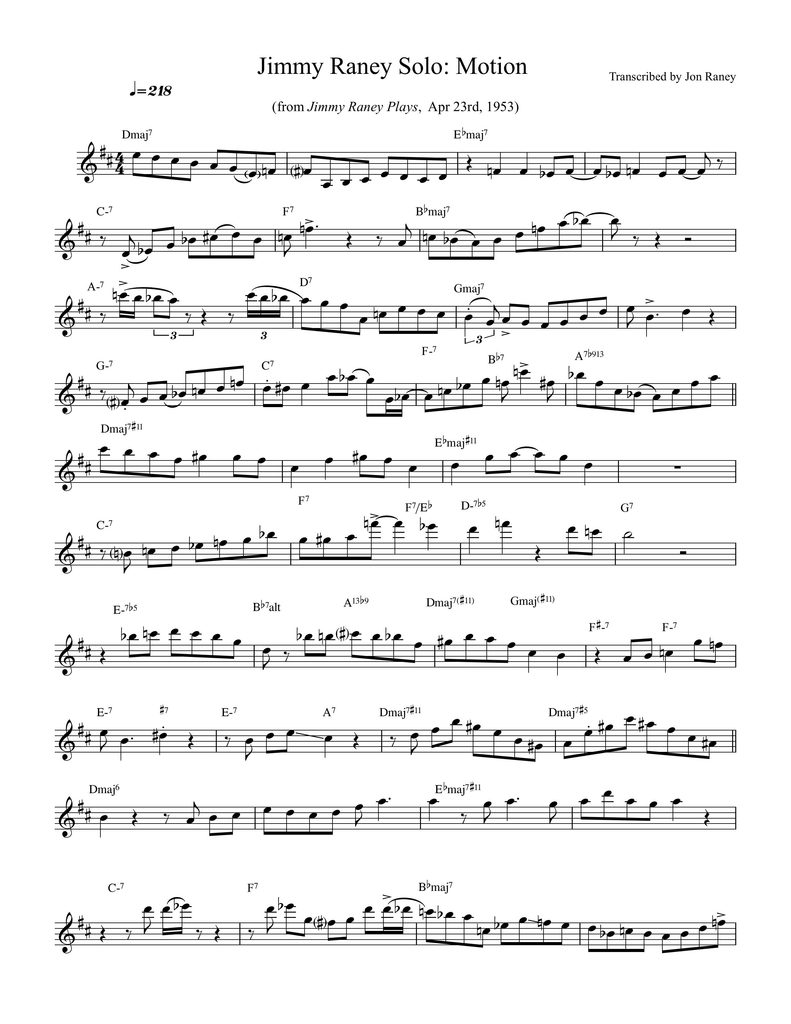
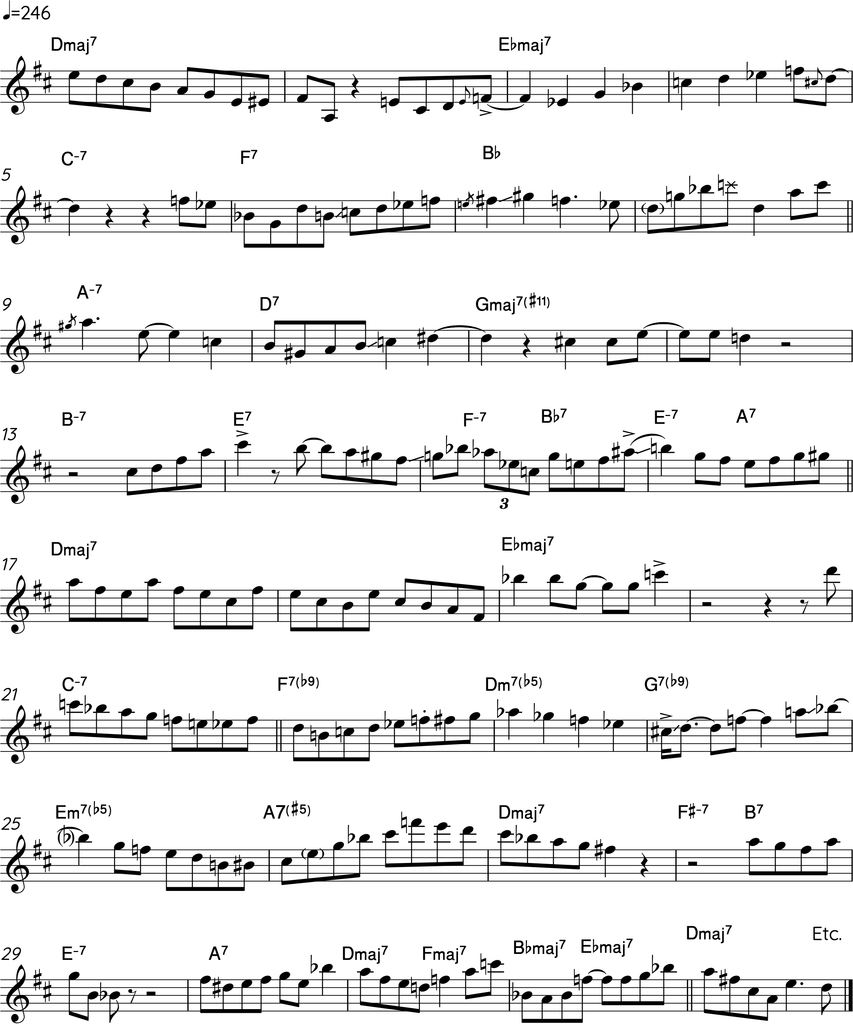
An interesting point of comparison between the two guitarists is on Jimmy’s classic tune, “Motion,” which is a contrafact on “You Stepped Out of a Dream” transposed to the key of D. Dad recorded it on his debut record, Jimmy Raney Plays, in 1953. It has an incredibly modern, almost Classical chamber music sound, with Jimmy rattling off his signature sophisticated lines and upward-leaning, Bartókian polychords at the end of the first chorus. Doug recorded it with Joe Cohn for his record, Two Funky People (I actually arranged it, as well as “Solar”). For this version, the tempo is moved up substantially, and Doug gets right down to business, playing his signature singing and swinging hard bop lines. Just to mention, Joe Cohn’s comping work for Doug’s choruses on Jimmy’s tune is equally exemplary.
There is still plenty of Jimmy in his playing; in fact, he quotes the exact same opening break Jimmy plays before he diverges. But you’ll also hear some pentatonic lines mixed in, some classic Miles clichés, and his own “Half Nelson” turnaround. Doug also preferred the original song’s change on the VI–II7 to Jimmy’s substitute changes, which used descending II-Vs from the IV chord.
Check out the first chorus of both their solos below:
DOUG RANEY SOLO – MOTION
After Doug’s passing in 2016, I decided to pull myself out of the doldrums by recovering my piano skills and going out more to hear live jazz. I met Pat Martino that year for the first time (Doug knew him pretty well). We had corresponded some over the internet about the Birdland gig in ’96, and I went to see him live at his invitation at the Jazz Standard. He gave a lovely toast to Doug and the Raneys that night. I met Jerry Bergonzi during that summer in Boston, and I remember the first thing he said to me was, “Is it true?” I told him, “Yes, he’s gone,” as he nodded sadly back. I did manage to sit in with him and play a nice gig with him later that year.
Unfortunately, I have remained mostly idle as a performer since then. I don’t know why exactly. Whatever the reason, since then my goals have been simple: to focus on what everyone really appreciates about my family—the musical legacy that continues to speak to them. In Doug’s case, weirdly, I just really didn’t understand how great he was while he was with us. His beautiful jazz feel, sculpted lines, beautiful sound, and his rock-solid time in all playing contexts was something that I now realize was way more difficult than it sounded.
If Dad seemed a touch removed or ahead of the rest of us, Doug was somehow playing right in the thick of it, playing a little better than the rest of us on the stand—like a guy who always manages to score the winning basket even when we thought we might have a chance. (I don’t think I could beat him at basketball either, even if I had a very decent jumpshot).
I miss you, my brother. Another deserving toast to what you accomplished through all your struggles. You left us way too soon.
This article originally appeared on Jon’s Substack.
Discover more from The Raney Legacy
Subscribe to get the latest posts sent to your email.