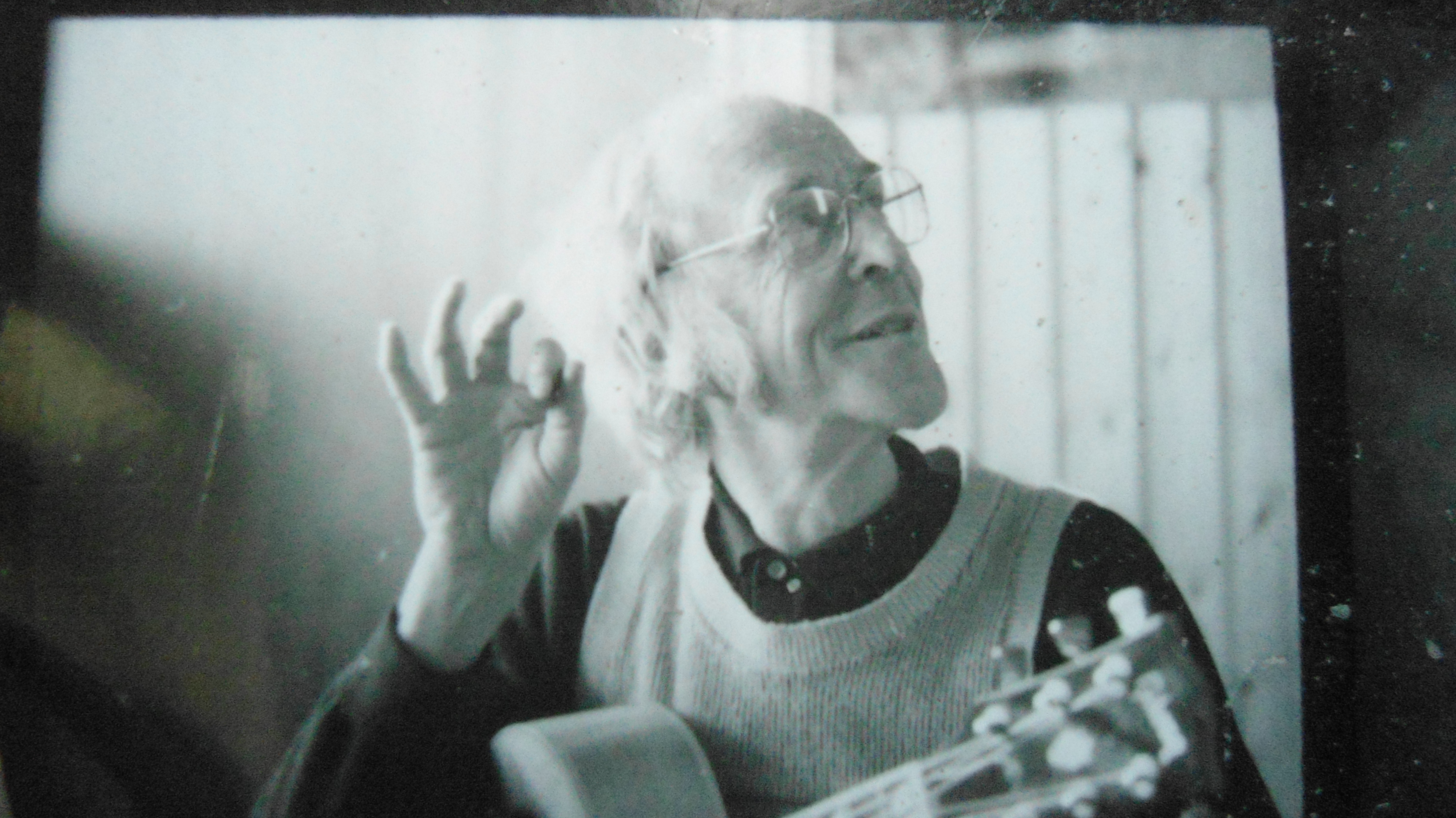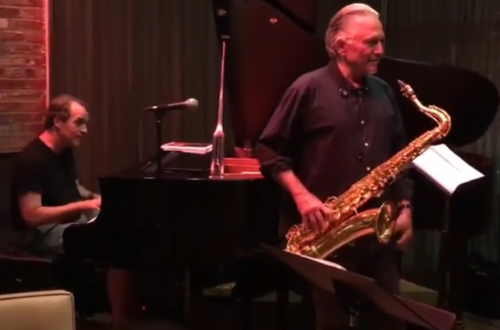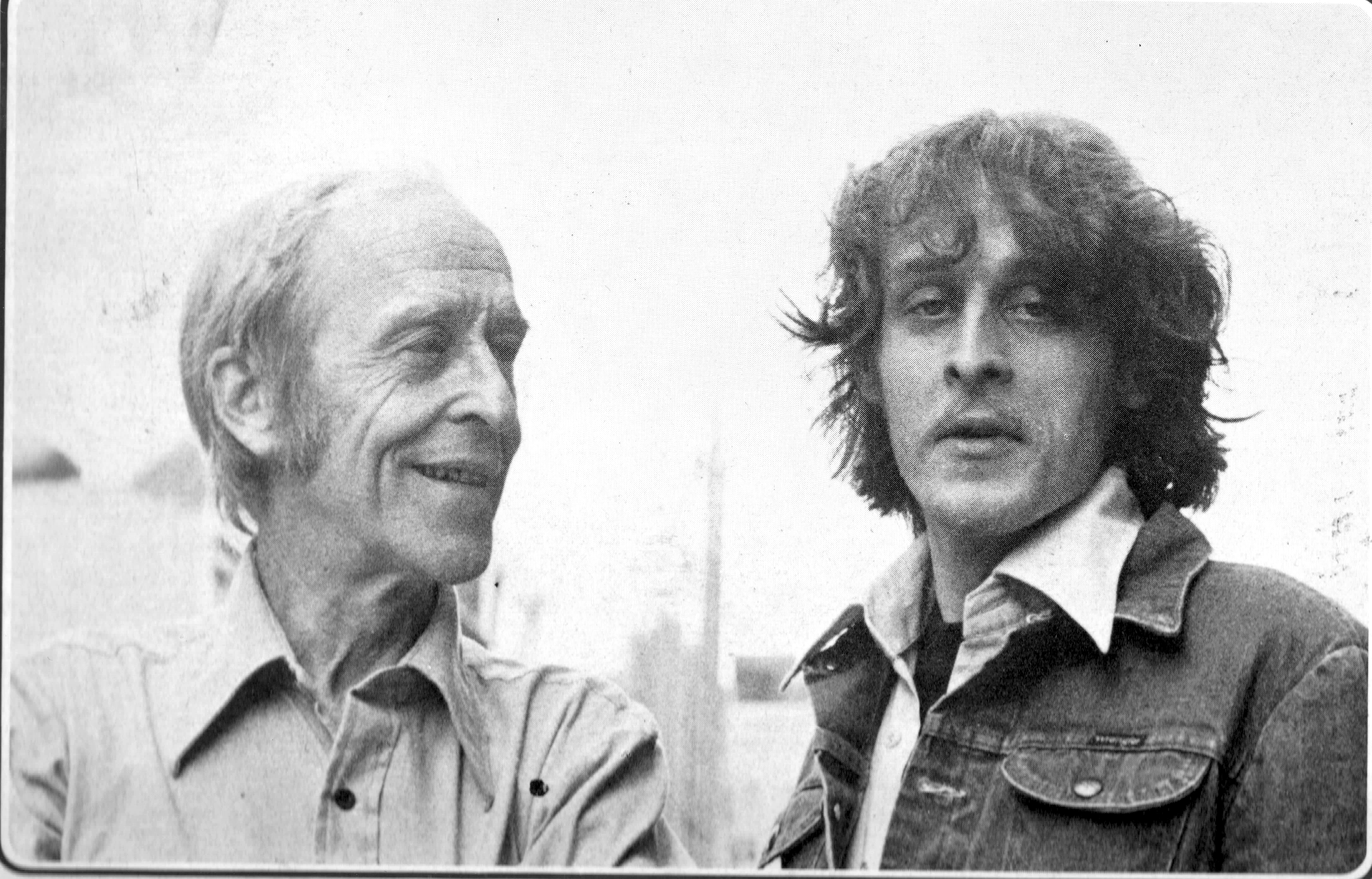
It’s been over 9 years since Doug Raney left this world, which is still hard for me to fathom given he never even reached age 60. I probably have explored enough comparisons of Doug and Dad’s tragic personal struggles over the years, so this time I would like to focus on a less-explored topic, namely, how would I compare Doug to Jimmy generally?
Personality
Doug and Jimmy had strikingly different personalities. Where Dad had the air of a philosophic school teacher, often waxing on such brainy topics such as quantum mechanics or literary classics, Doug was more of a no-bullshit realist. Not that Doug wasn’t interested in some of the same things, it’s just that he preferred not to project that persona. Where Dad learned some French to raise his awareness, Doug actually became fluent in Danish, because he had to.
TV & Movies
Doug was a huge fan of old classic movies, in particular Humphrey Bogart’s and probably had seen almost every movie Bogart was in and watched them over and over. I can still picture him, mimicking Peter Lorre’s and Sydney Greenstreet’s voices and lines in the Maltese Falcon and Bogarts’ retorts with a snicker right before they uttered them.
Dad would do the same thing, but he did it as an ironic expression of being trapped in TV’s endless rotation of repeating commercials. “Who pays? You do!” as he delivered Lorne Greene’s line from an insurance commercial just before Lorne did, like a pre-echo. And many others.
Dad was a fan of comedies like All in the Family and Barney Miller (videotaping every episode). Doug also watched All in the Family, but in particular was endlessly amused at how Europeans at the time didn’t seem to understand that Archie’s point of view was a put-on. “He’s so racist!” Doug would say comically in a quasi-Germanic accent.
Money
Dad was not concerned with the trapping of expensive things or clothes and was very frugal, droning on endlessly about his Consumer Reports subscription and its savings opportunities. Doug was the opposite, spending money like it was going out of style. It was interesting to hear their digs against each other in this area. Dad told me the story many times about how Doug took the very first 50 bucks he earned and spent every penny on an expensive new pair of leather boots. Doug on the other hand was exasperated that Dad seemingly had no sense of style at all, showing up to his gigs in an ancient shirt, canvas shoes and an ill-fitting jacket and tie (or none at all).
Their Musical Journeys and a Common Ally
In this short life, Doug learned somewhat late, but he caught up, entering the jazz scene very early on, gaining a reputation and making his first professional recording nearly the same age as Dad, age 21. In comparison, Dad, at 14, was already playing local professional gigs. Doug at that age, was just starting to learn guitar, and playing rock first for quite some time.
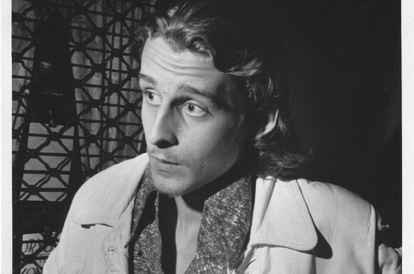
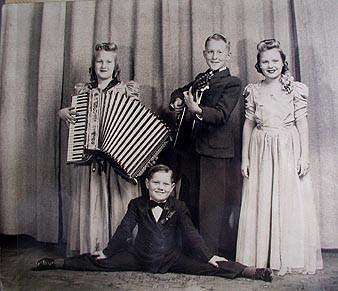
While Jimmy had more of traditional study route with a few guitar teachers teaching him the fundamentals, Doug was for the most part self-taught. He did study a little with Barry Galbraith (a noted monster sight-reader and studio player), but didn’t have much patience for technical exercises or reading as he wanted to get straight into playing jazz professionally. His sight-reading skills never materialized but it never really hindered him as he just used his tremendous ears and timing to make his mark on the music scene. Dad’s emergence as a good sight reader came later after being embarrassed on studio calls. His experience with this is recounted here in this YouTube Video.
A common ally in both Jimmy and Doug’s development was pianist, Al Haig. Al, who is a bit older than Jimmy, was already established player in bebop when the two met in the Jerry Wald band in the mid-forties. Al observed that Jimmy was playing a lot of corny stuff, and reportedly sent him home with a study list of the best bebop records. Doug was just getting his bearings with a basic list of standards (maybe 20-30 tops) when Al called him for a gig at Gregory’s in Manhattan’s upper east side. Despite his lack of experience, Al could see his potential. This relationship culminated in Doug making his debut at age 17 on Al’s record with the three of them on “Out of Nowhere” from Strings Attached in 1974.
A common ally in both Jimmy and Doug’s development was pianist, Al Haig. Al, who is a bit older than Jimmy, was already established player in bebop when the two met in the Jerry Wald band in the mid-forties. Al observed that Jimmy was playing a lot of corny stuff, and reportedly sent him home with a study list of the best bebop records. Doug was just getting his bearing with a basic list of standards (maybe 20-30 tops) when Al called him for a gig at Gregory’s in Manhattan’s upper east side in the 70s. Despite his lack of experience, Al could see his potential. This relationship culminated in Doug making his debut at age 17 on Al’s record with the three of them on “Out of Nowhere” from Strings Attached in 1974.
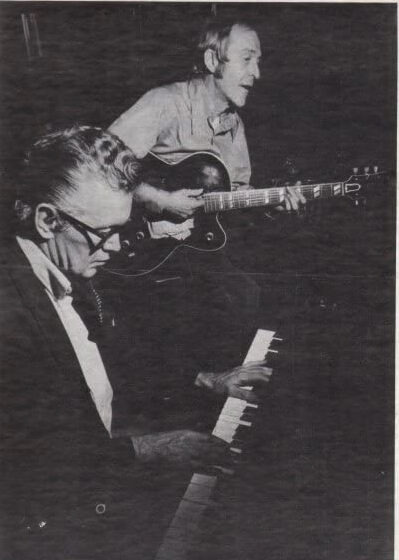
Doug’s biggest major first experience came as Dad’s accompanist in the famous jazz piano bar, Bradley’s in 1976. Doug described the experience as “frightening” given Dad’s stature and the who’s who of jazz that would show up every night to listen. At this point, Doug was heavily under his idol’s influence; to a degree this was brought about by practicality, where as his accompanist he had to shadow Jimmy’s every move. The critical comparisons and their stylistic similarities was often a thorn in his side which eventually he would shake.
The Development of their Styles
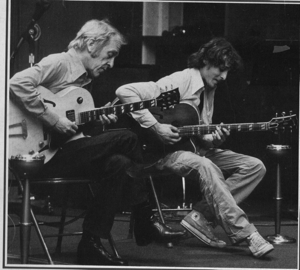
Although Doug’s earliest influence is obviously Dad, he was also steeped into the records he was hearing on jazz radio at the time (WRVR). His favorite players were from the post bop era and Blue Note Records, such as John Coltrane, Sonny Stitt, Dexter Gordon, Horace Silver, Cannonball Adderly, and Herbie Hancock among others. He learned all the records by transferring them to his reel-to-reel machine. He double tracked play along tapes for himself and transcribed his favorite solos at 1/2 speed.
Like many jazz guitarists, Doug fell under the spell of Pat Martino, whom he first encountered as a sideman on Don Schlitten’s Muse label on such records as Don Patterson’s Funk You. What impressed him the most was how Martino’s guitar solos could hold their own in the face of top flight soloists McPherson and Stitt. “I always admired that power that Martino had,” Doug recounted. Doug’s first outings as a leader reflected the pursuit of this ideal, and in particular Cutting Loose, which included Martino’s “Lean Years”, along with fellow hard-bopper Bernt Rosengren, marked a distinct divergence in Doug & Jimmy’s musical tastes and styles.
Where Doug deployed a sink-or-swim method, Dad was a bit more careful about his career development. He often mentioned how Doug’s decision to record early and improve on every record was unique and not something he could do. By the time Jimmy was ready for his first date as a leader, he was almost 26 and had vast professional experience under his belt. Initially under the spell of Charlie Christian, then later Parker and Powell, Jimmy was clearly moving into another style entirely that was highly original and informed by multiple sources including Classical composers like Bach and Bartok. He was studying composition with Hall Overton and learning the cello, with the ambition of writing a legitimate string quartet. His first record, Jimmy Raney Plays, though having things in common with the post bop movement, was something entirely his own. There is quality in Jimmy’s playing that was somehow removed from the era he was playing in that is not easily described.
At around age 40 in their respective careers, where Dad updated his language with sometimes non-guitaristic, perhaps even cello influenced elements,
Doug refined and crafted his core language, dropping unnecessary phrases and digging in, developing even stronger Doug-isms.
Where Dad took a composer’s approach and let his ideas create the pocket,
Doug got deeper into the drummer’s pocket, playing funkier time feel with a feeling of the blues.
Jimmy & Doug’s Legacies and Common Fans
It’s my personal observation that Doug’s status as a player has only elevated since his death in 2016. I have made many friends on the Internet with guitar fans who are more focused on Doug’s playing than Dad’s, in particular his trio recordings with Chet Baker and NHØP, his first recordings as a leader like Cutting Loose, and later records such as Somethings Up, Blues on a Par and Back in New York. Last year, I wrote an article about all the YouTube buzz he has been getting the last few years, with tons of transcription performances and analysis: Doug Raney in Age of Content Creation.
On Doug’s record date, The Backbeat with the late, great Joey DeFrancesco in 1998, Joey’s regular guitarist, Paul Bollenback came in the middle of the session to check it out. I remember the gesture Joey made during the date when Paul asked how the session was going. “Fucking Doug Raney, man!” exclaimed Joey, playing air guitar and imitating Doug’s lines. Paul made an interesting comment while listening to his “Love for Sale” solo, saying, “He almost sounds like he’s on the verge of messing up, but he never does!” For me, I attribute this to the fact that Doug just lets it all hang out, playing as vividly as he can, come what may.
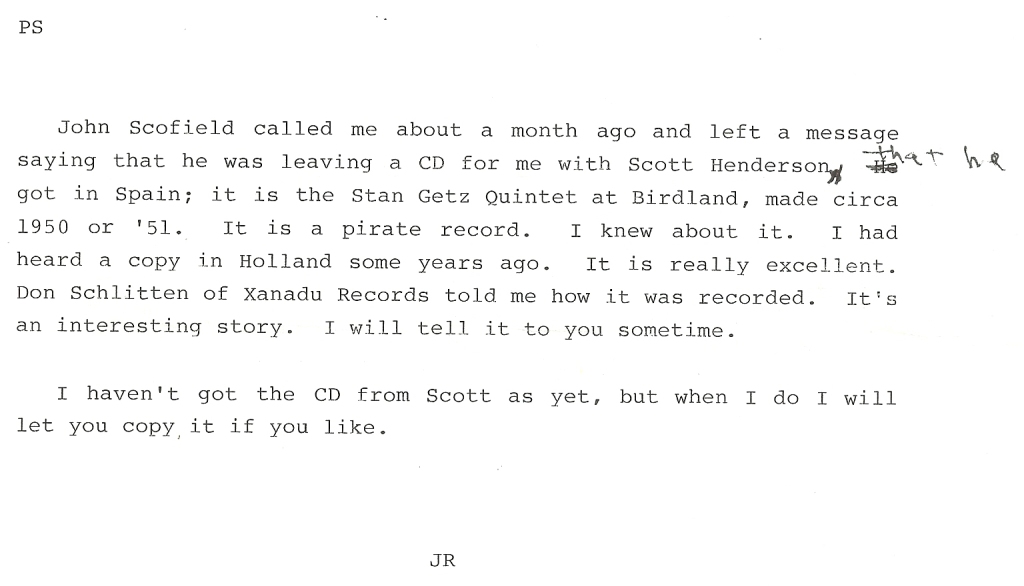
I have also had interactions with noted players such as John Scofield, Dave Stryker, Peter Bernstein and others not only about their admiration for Jimmy but also Doug’s playing. Scofield and I corresponded about when he saw and jammed with Doug in Denmark’s La Fontaine club in Denmark, where they, purportedly, shared the same guitar. Oh, to be a fly on the wall for that! Scofield is also a major fan of Jimmy and he in fact gave Jimmy the first copy of Stan Getz Quintet at Birdland in 1952 while in Spain. Below is note by Dad about this to Louisville jazz radio host, Phil Bailey:
The Final Bar
I have often mentioned before the parallel, separate lives my brother and I lived, the gaps in between (1978 -1992) and the brief re-convergence of our paths (1993-1998). I captured this in earlier article some time ago. I think you will find it interesting: Recollections from a Special Night in ’93.
One of the few gigs we made together were captured live in 1996 and shared on YouTube some time ago. In case any of you haven’t heard it it’s here. I admired Doug greatly, learned a lot from him and he was always supportive of me when I was feeling the pressure. I miss him terribly and often have dreams that he is miraculously alive (last week, in fact).
All I can do now is sing his praises in his absence, along with our legendary father as much as possible here in Internet-land, along with all of you out there.
Happy Birthday, Doug Raney. We’re still diggin’ you!
Discover more from The Raney Legacy
Subscribe to get the latest posts sent to your email.